Exploring Climate Liminality
in a Mixed Reality
“If every rule requires interpretation, how do we know that we’re following it correctly?”
— Ludwig Wittgenstein
The Hideaway in The Nether exceeds current technological limits by simulating sensory experiences beyond vision, including touch, taste, smell, and sound. In contrast, contemporary technologies such as Artificial Intelligence (AI) and Virtual Reality (VR) remain far from this level of immersion. These systems also rely on significant environmental resources. Data centres require large quantities of water for cooling, while hardware production depends on the extraction of precious metals. These processes often occur at the expense of marginalized communities, exposing inequities in labour, access, and resource distribution. This installation asks whether technological innovation should be prioritized over the environmental systems that sustain human life.
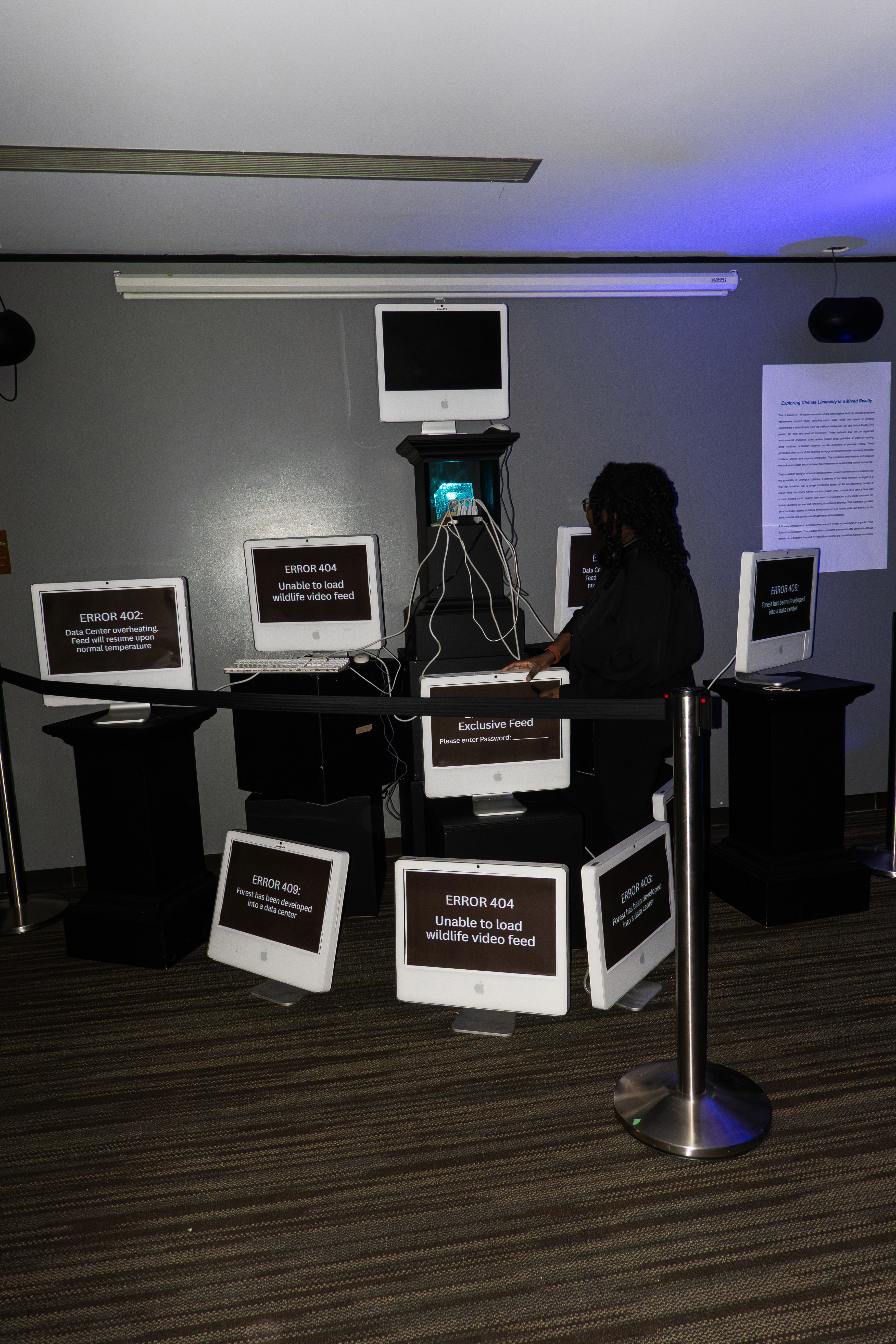
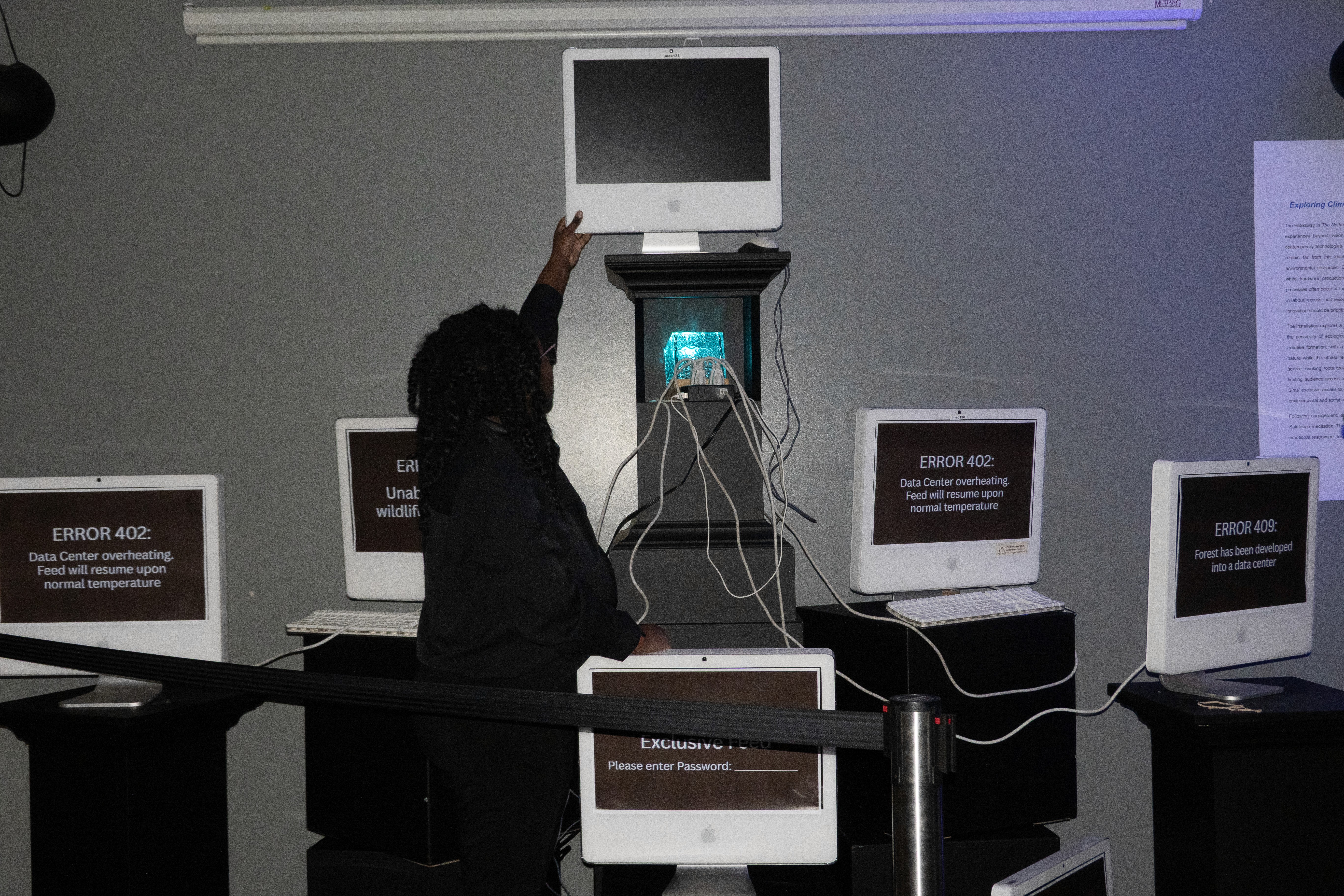
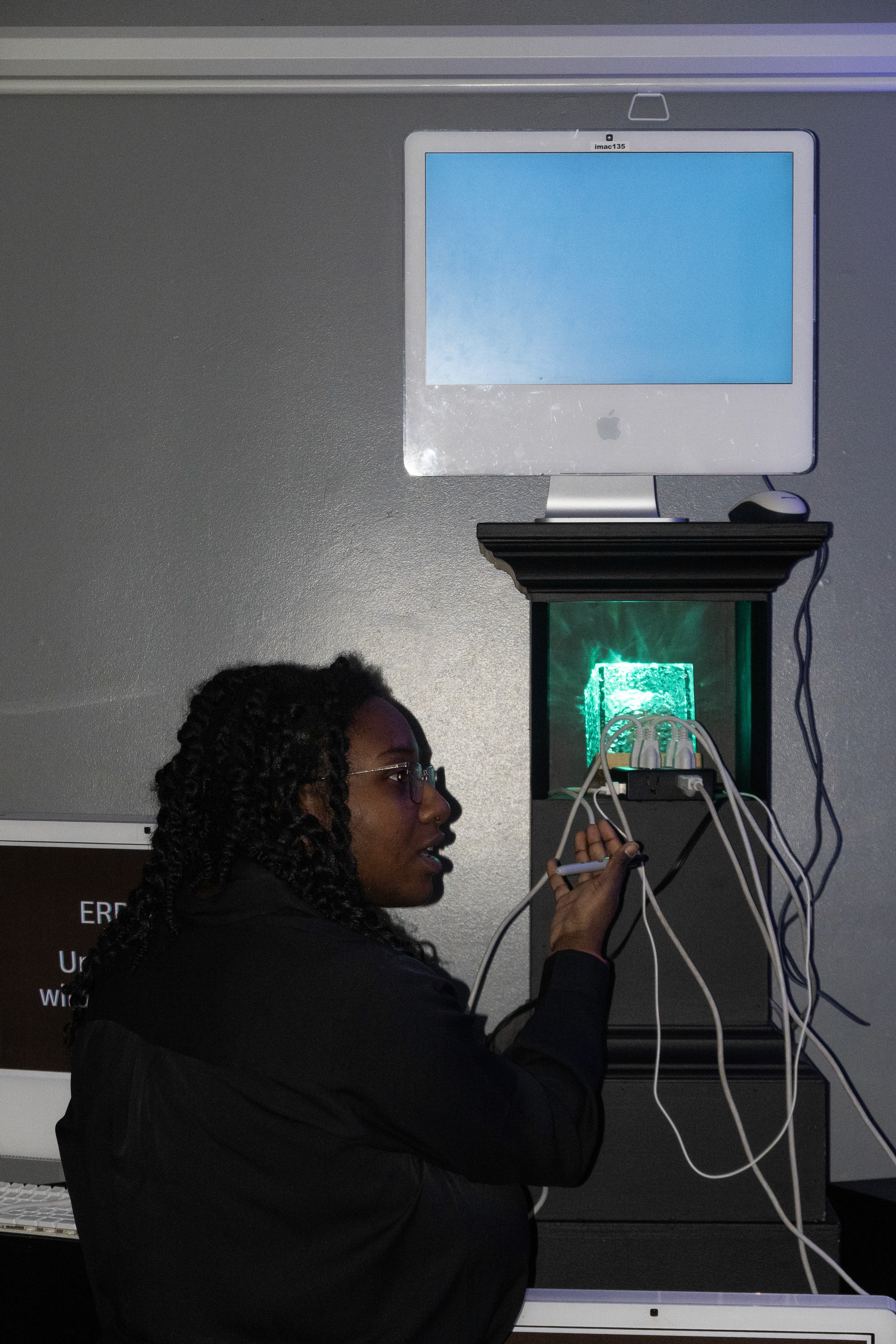
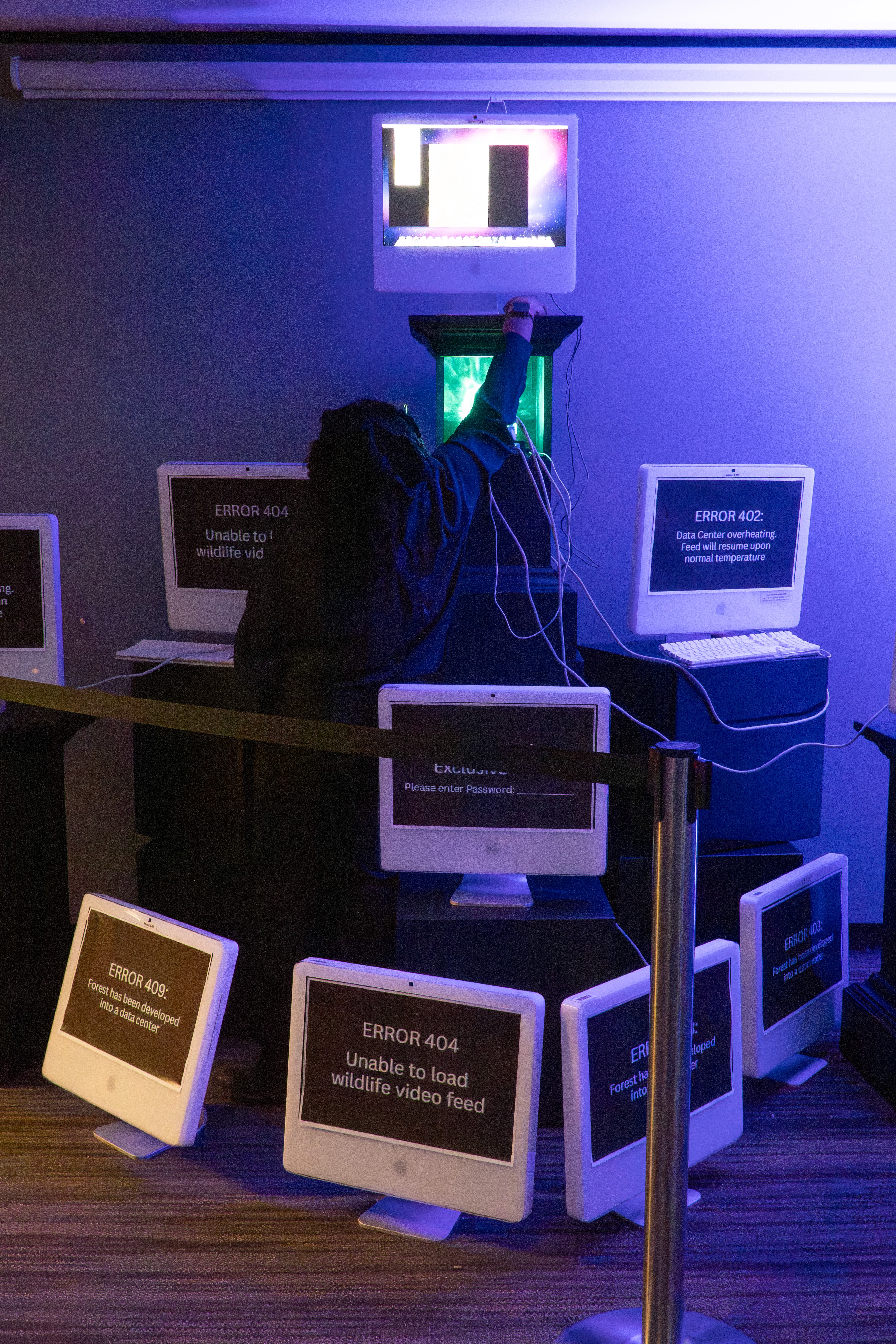
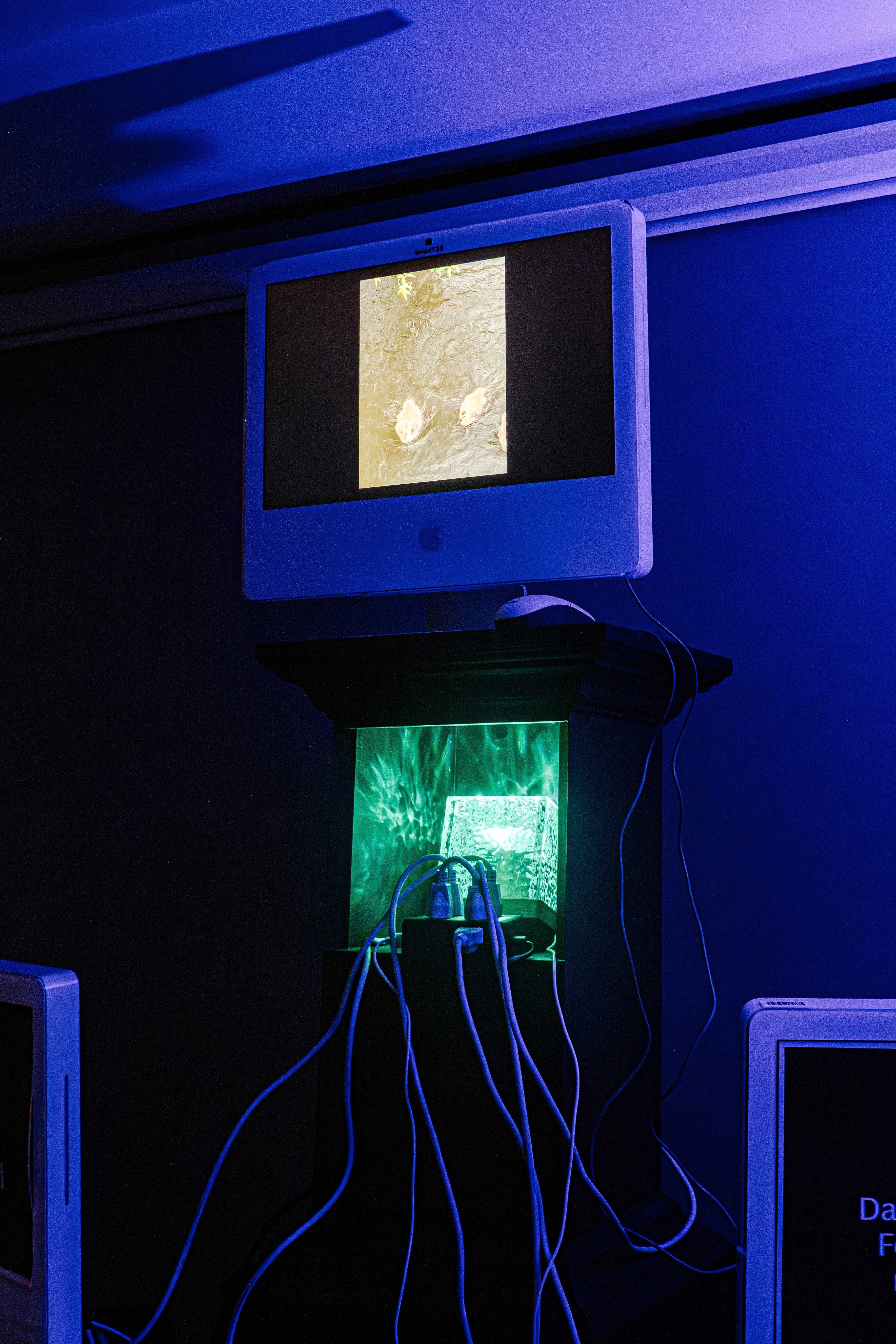
The installation explores a liminal space between present environmental conditions and the possibility of ecological collapse. It consists of ten iMac monitors arranged in a tree-like formation, with a single functioning screen at the top displaying footage of nature while the others remain inactive. Power cords connect to a central blue light source, evoking roots drawing from water. The installation is physically cordoned off, limiting audience access and reflecting disparities in privilege. This restriction parallels Sims’ exclusive access to natural environments in The Nether while also pointing to the environmental and social costs of technological development.
Following engagement, audience members are invited to participate in a guided Tree Salutation meditation. This practice offers a moment to re-centre after potentially difficult emotional responses. Inspired by natural processes, the meditation includes embodied gestures such as embracing a tree, scooping water, and washing the face. These movements are repeated in four directions, including one facing the installation. This encourages reflection on the role of nature in daily life and on how climate change may reshape human experience across physical, emotional, and psychological dimensions. As an ethical extension of the installation, the meditation supports emotional regulation and facilitates a transition into the theatre space. This aligns with Michael Chekhov’s concept of “crossing the threshold,” a psycho-physical shift into imaginative presence. Given the challenging themes of The Nether, including abuse and exploitation, this moment allows audiences to enter the performance in a more grounded state.
Victor Turner’s concept of liminality describes a state of in-betweenness that may be temporal, spatial, or psychological. The Ante Room functions as such a space, positioned between everyday life and the theatrical experience. Turner suggests that liminal states can foster transformation and a sense of shared connection, or communitas. Within this framework, The Nether situates contemporary society at a threshold between environmental restoration and ecological degradation. This installation reflects a world in which environmental resources are increasingly commodified and privatized for the benefit of the wealthy and powerful. Technological advancement continues to expand, often at the expense of communities facing pollution and displacement. These conditions echo the hierarchies depicted in The Nether and suggest a trajectory that may become reality if sustainability is not prioritized.
Alex Ferguson, Dramaturg