Grow and Release
Grow and Release
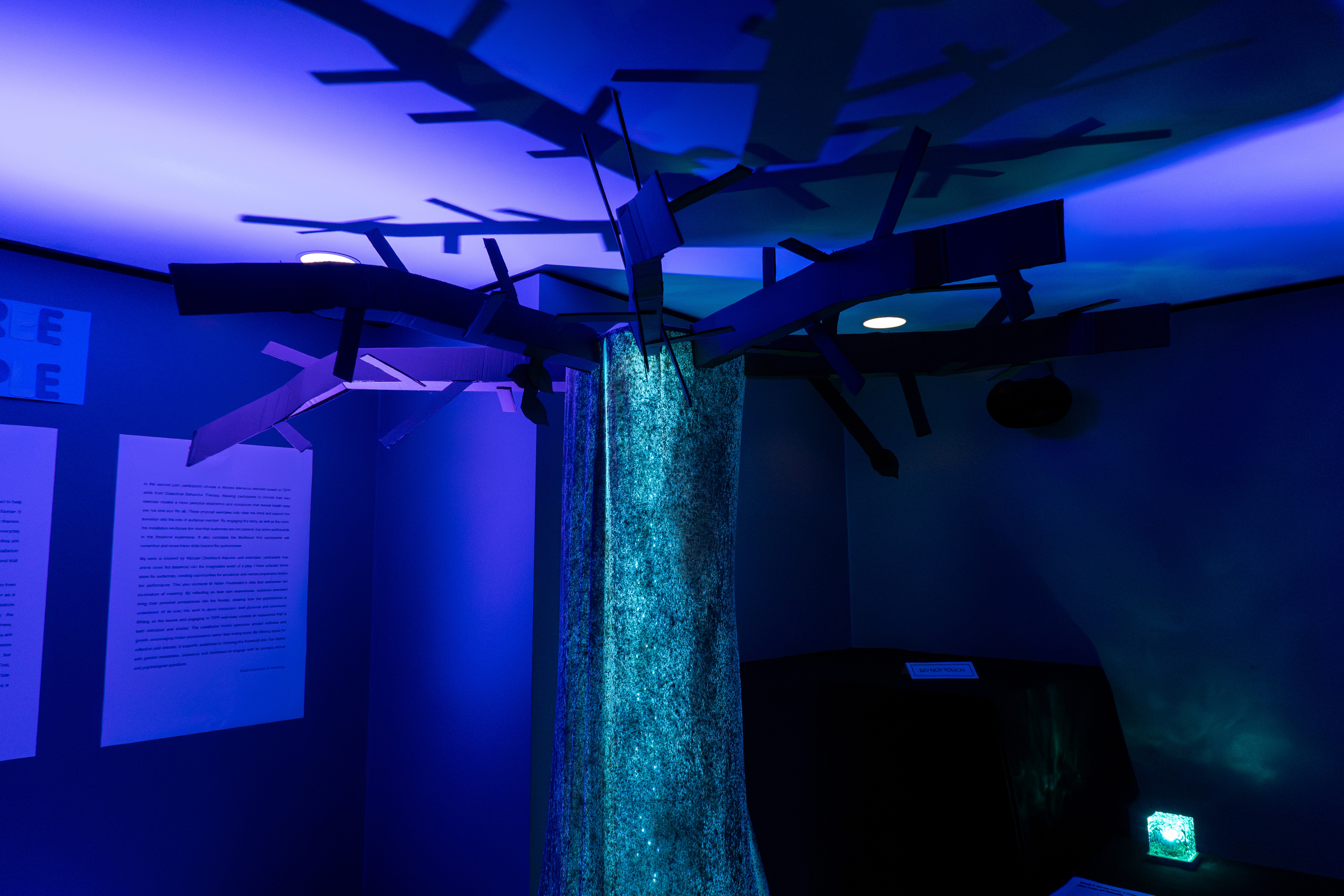
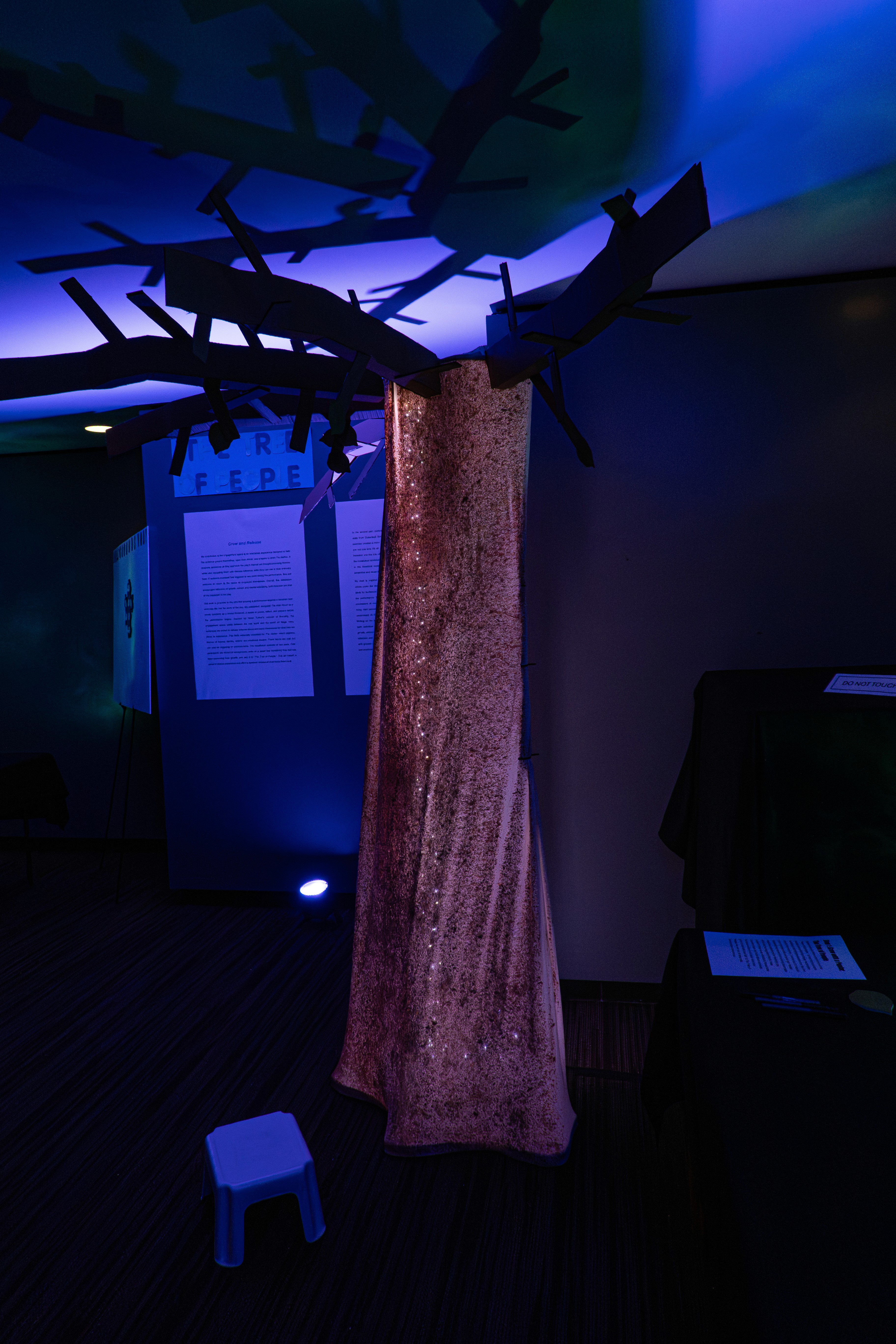
My contribution to the engagement space is an interactive experience designed to help the audience ground themselves, open their minds, and prepare to enter The Nether. It supports audiences as they approach the play’s intense yet thought-provoking themes, while also equipping them with distress tolerance skills they can use in their everyday lives. If audience members feel triggered at any point during the performance, they are welcome to return to the space to re-ground themselves. Overall, this installation encourages reflection on growth, control, and mental well-being, both their own and that of the characters in the play.
This work is grounded in the idea that entering a performance requires a transition from everyday life into the world of the play. My installation, alongside The Ante Room as a whole, functions as a liminal threshold, a space to pause, reflect, and prepare before the performance begins. Inspired by Victor Turner’s concept of liminality, the engagement space exists between the real world and the world on stage. Here, audiences are invited to release external stress and ready themselves for what they are about to experience. This feels especially important for The Nether, which explores themes of trauma, identity, control, and emotional escape. These topics are vital, but can also be triggering or uncomfortable. The installation consists of two parts. First, participants are invited to anonymously write on a paper leaf something they feel has been preventing their growth, and add it to “The Tree of People.” This act fosters a sense of shared experience and offers a symbolic release of what holds them back.
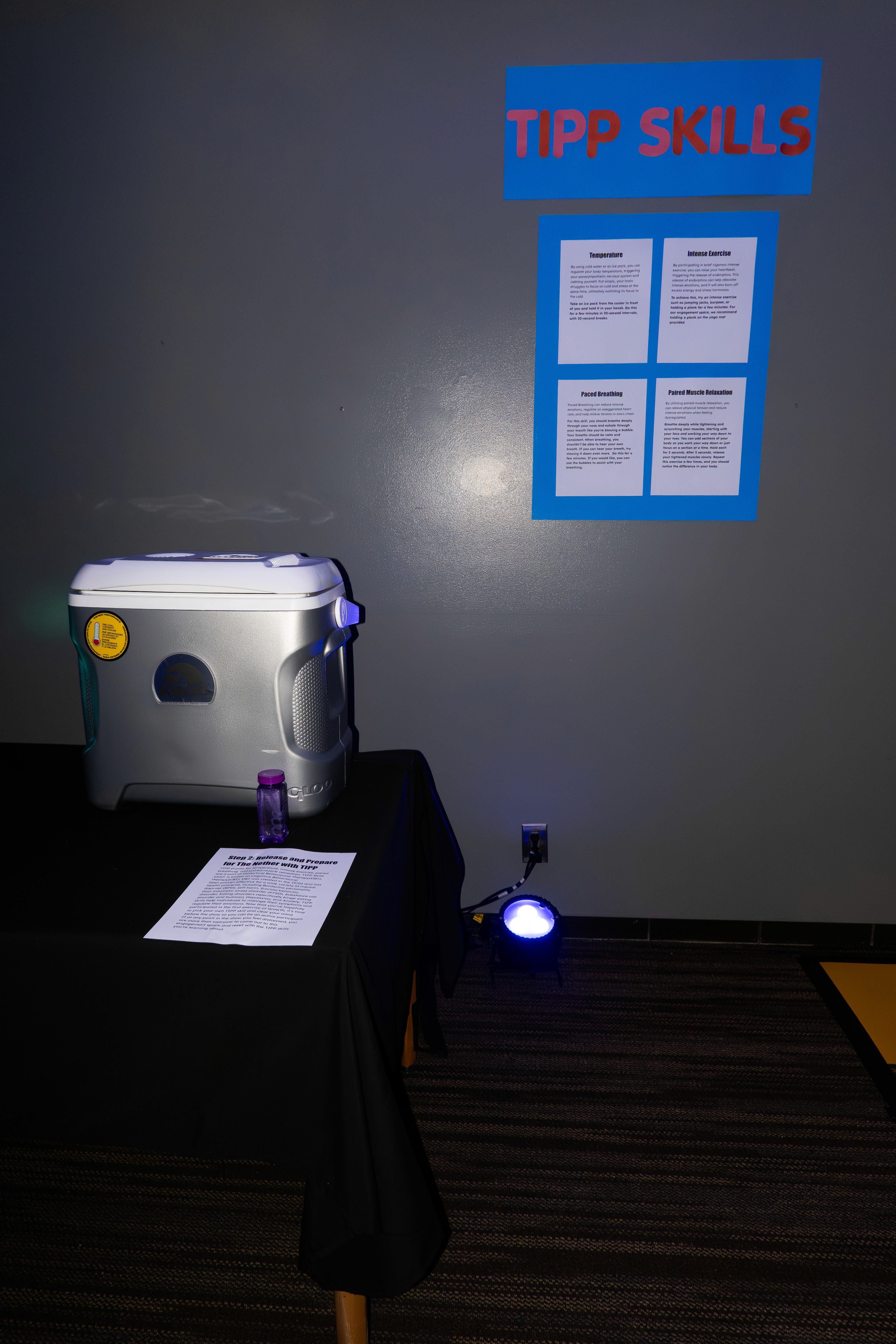
In the second part, participants choose a distress tolerance exercise based on TIPP skills from Dialectical Behaviour Therapy. Allowing participants to choose their own exercise creates a more personal experience and recognizes that mental health tools are not one size fits all. These physical exercises help clear the mind and support the transition into the role of audience member. By engaging the body as well as the mind, the installation reinforces the idea that audiences are not passive, but active participants in the theatrical experience. It also increases the likelihood that participants will remember and reuse these skills beyond the performance.
My work is inspired by Michael Chekhov’s theories and exercises, particularly how actors cross the threshold into the imaginative world of a play. I have adapted these ideas for audiences, creating opportunities for emotional and mental preparation before the performance. This also connects to Helen Freshwater’s idea that audiences are co-creators of meaning. By reflecting on their own experiences, audience members bring their personal perspectives into the theatre, shaping how the performance is understood. At its core, this work is about interaction, both personal and communal. Writing on the leaves and engaging in TIPP exercises creates an experience that is both individual and shared. The installation invites openness around wellness and growth, encouraging these conversations rather than hiding them. By offering space for reflection and release, it supports audiences in crossing the threshold into The Nether with greater awareness, presence, and readiness to engage with its complex ethical and psychological questions.
My contribution to the engagement space is an interactive experience designed to help the audience ground themselves, open their minds, and prepare to enter The Nether. It supports audiences as they approach the play’s intense yet thought-provoking themes, while also equipping them with distress tolerance skills they can use in their everyday lives. If audience members feel triggered at any point during the performance, they are welcome to return to the space to re-ground themselves. Overall, this installation encourages reflection on growth, control, and mental well-being, both their own and that of the characters in the play.
This work is grounded in the idea that entering a performance requires a transition from everyday life into the world of the play. My installation, alongside The Ante Room as a whole, functions as a liminal threshold, a space to pause, reflect, and prepare before the performance begins. Inspired by Victor Turner’s concept of liminality, the engagement space exists between the real world and the world on stage. Here, audiences are invited to release external stress and ready themselves for what they are about to experience. This feels especially important for The Nether, which explores themes of trauma, identity, control, and emotional escape. These topics are vital, but can also be triggering or uncomfortable. The installation consists of two parts. First, participants are invited to anonymously write on a paper leaf something they feel has been preventing their growth, and add it to “The Tree of People.” This act fosters a sense of shared experience and offers a symbolic release of what holds them back.
In the second part, participants choose a distress tolerance exercise based on TIPP skills from Dialectical Behaviour Therapy. Allowing participants to choose their own exercise creates a more personal experience and recognizes that mental health tools are not one size fits all. These physical exercises help clear the mind and support the transition into the role of audience member. By engaging the body as well as the mind, the installation reinforces the idea that audiences are not passive, but active participants in the theatrical experience. It also increases the likelihood that participants will remember and reuse these skills beyond the performance.
My work is inspired by Michael Chekhov’s theories and exercises, particularly how actors cross the threshold into the imaginative world of a play. I have adapted these ideas for audiences, creating opportunities for emotional and mental preparation before the performance. This also connects to Helen Freshwater’s idea that audiences are co-creators of meaning. By reflecting on their own experiences, audience members bring their personal perspectives into the theatre, shaping how the performance is understood. At its core, this work is about interaction, both personal and communal. Writing on the leaves and engaging in TIPP exercises creates an experience that is both individual and shared. The installation invites openness around wellness and growth, encouraging these conversations rather than hiding them. By offering space for reflection and release, it supports audiences in crossing the threshold into The Nether with greater awareness, presence, and readiness to engage with its complex ethical and psychological questions.
Soph Fonseca, Dramaturg
Soph Fonseca, Dramaturg
Installation GALLERY
We acknowledge that this theatre and the university that holds it stand on the traditional territories of the Attawandaron (also known as the Neutral), Anishinaabeg, and Haudenosaunee peoples. Our main campus is in Block 2 of the Haldimand Tract, land promised in 1784 by the British Crown to the Haudenosaunee of the Grand River in recognition of their alliance during the American Revolution.
This territory, which includes six miles on either side of the Grand River, is governed by the Dish with One Spoon Wampum, an agreement that teaches that the land is a shared dish from which we all eat, and that we carry collective responsibilities: to take only what we need, to ensure there is enough for others, and to keep the dish clean for those who come after us. It is an agreement rooted in care, reciprocity, and stewardship.
Gathering here in this theatre, on this land, within this agreement, means recognizing that welcome comes with responsibility. It asks us to consider how we move through shared spaces, how we care for one another, and how the systems we build shape access, safety, and belonging as equal partners.
We acknowledge that this theatre and the university that holds it stand on the traditional territories of the Attawandaron (also known as the Neutral), Anishinaabeg, and Haudenosaunee peoples. Our main campus is in Block 2 of the Haldimand Tract, land promised in 1784 by the British Crown to the Haudenosaunee of the Grand River in recognition of their alliance during the American Revolution.
This territory, which includes six miles on either side of the Grand River, is governed by the Dish with One Spoon Wampum, an agreement that teaches that the land is a shared dish from which we all eat, and that we carry collective responsibilities: to take only what we need, to ensure there is enough for others, and to keep the dish clean for those who come after us. It is an agreement rooted in care, reciprocity, and stewardship.
Gathering here in this theatre, on this land, within this agreement, means recognizing that welcome comes with responsibility. It asks us to consider how we move through shared spaces, how we care for one another, and how the systems we build shape access, safety, and belonging as equal partners.