The Layers of Our Own Hideaways
The Layers of Our Own Hideaways
The Layers of Our Own Hideaways is a research installation that connects themes of coping, addiction, and descent into harmful situations in The Nether to the personal experiences of audience members navigating escapist or immersive spaces. Through a visual and audio journey within each layer of the tunnel, audiences are invited to cross a threshold into their own narratives, reflecting on their lived realities, the routines that shape them, and the ways people seek refuge when reality becomes emotionally overwhelming. In doing so, the installation prepares audiences to engage with the play’s moral and psychological questions by guiding them through an experiential transition between everyday life and escapism.
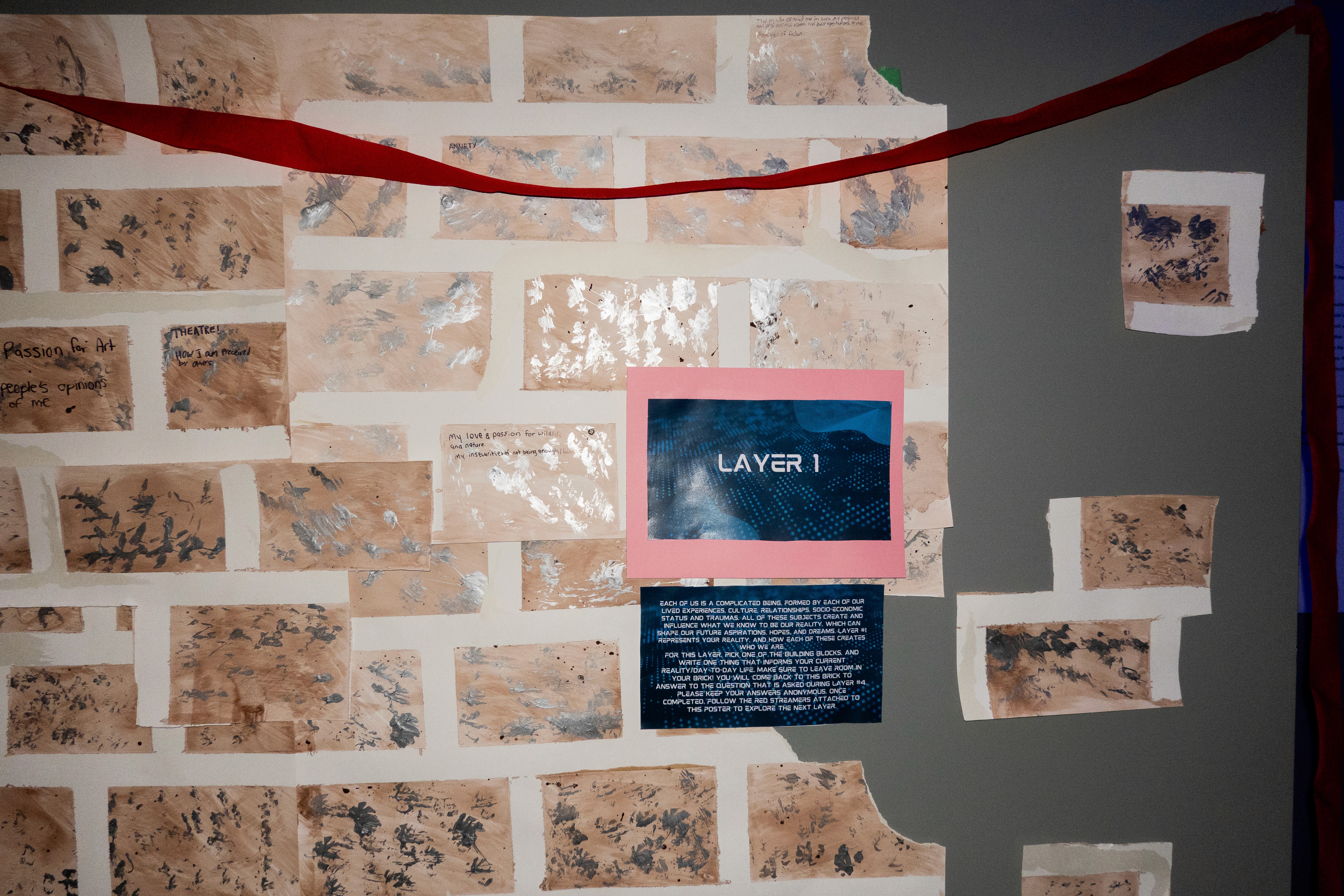
The installation is structured in four layers, each gradually moving audiences from the familiarity of reality toward a seductive and elusive hiding space. In Layer 1, audiences encounter a brick wall where they write a factor that shapes their everyday reality, prompting the question: What are the building blocks that create my reality?
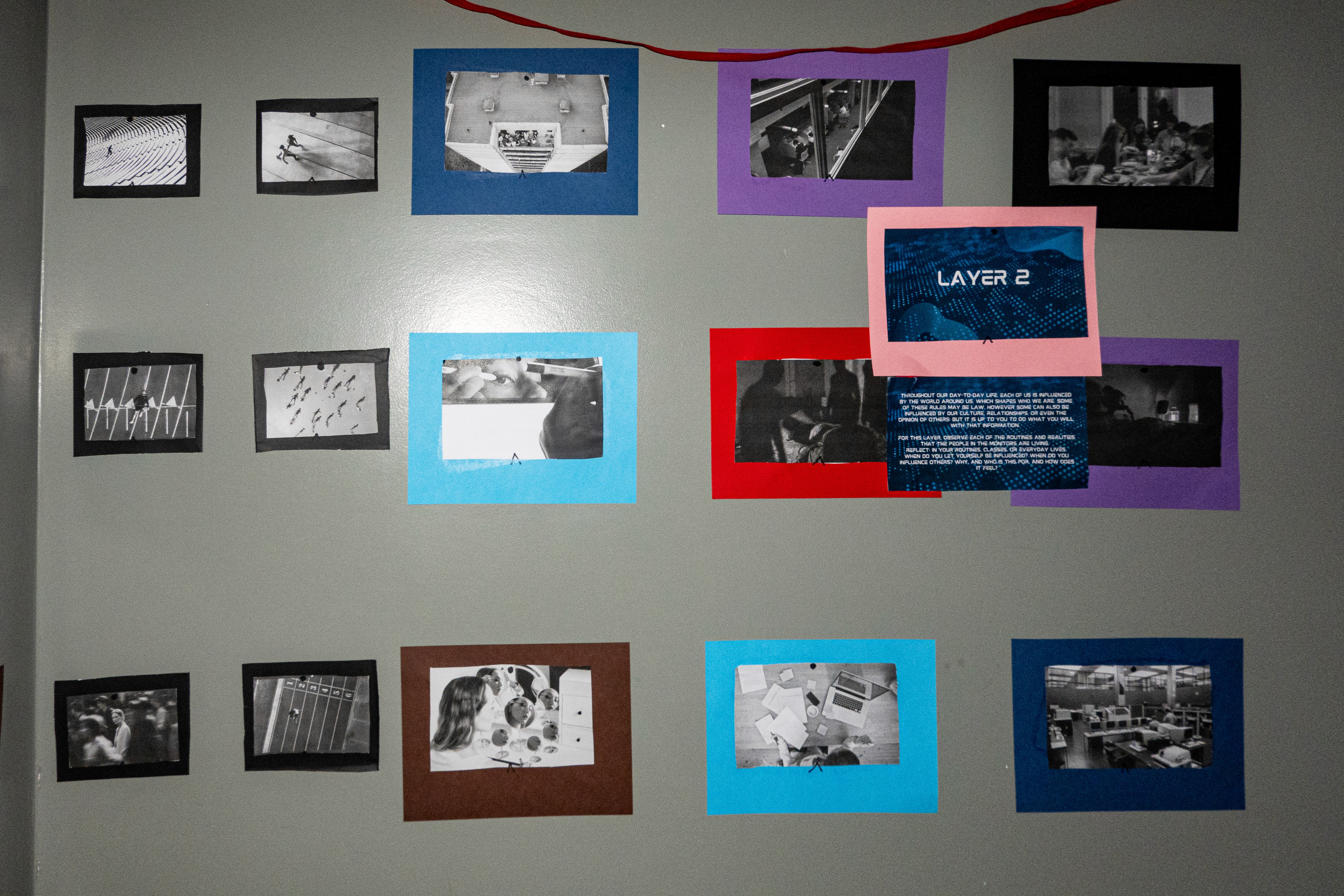
Layer 2 reflects the repetitive structures of modern life, asking audiences to consider how routines, social expectations, cultural norms, and daily habits influence identity and autonomy. This layer poses the questions: When are you influenced by others? When do you influence others, and why?
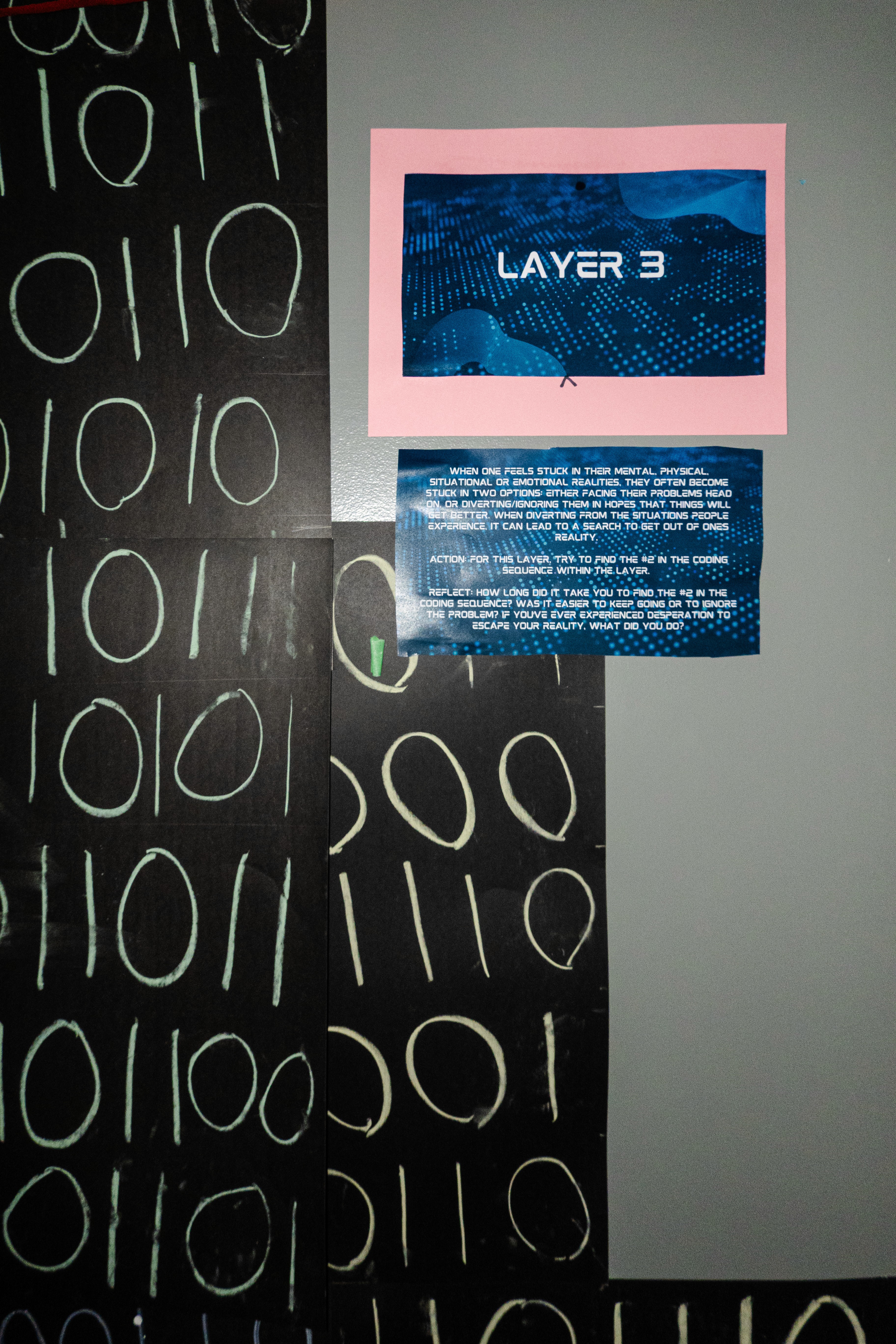
Layer 3 introduces the search for escape. Audiences encounter coded sequences and must locate a hidden number, representing the mental searching process that can occur when individuals feel trapped within their circumstances. This moment highlights the tension between confronting problems and diverting attention away from them—a theme central to The Nether.
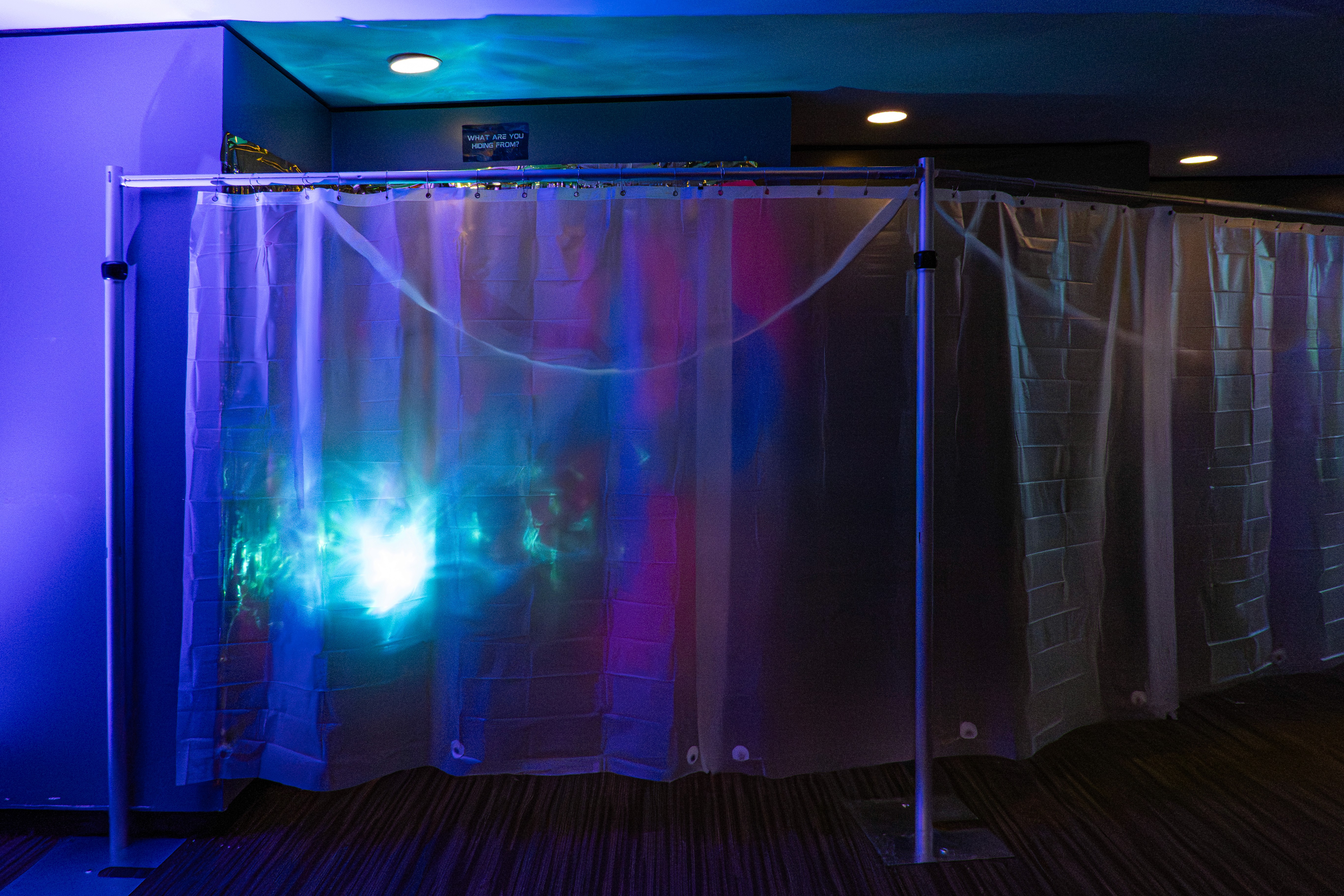
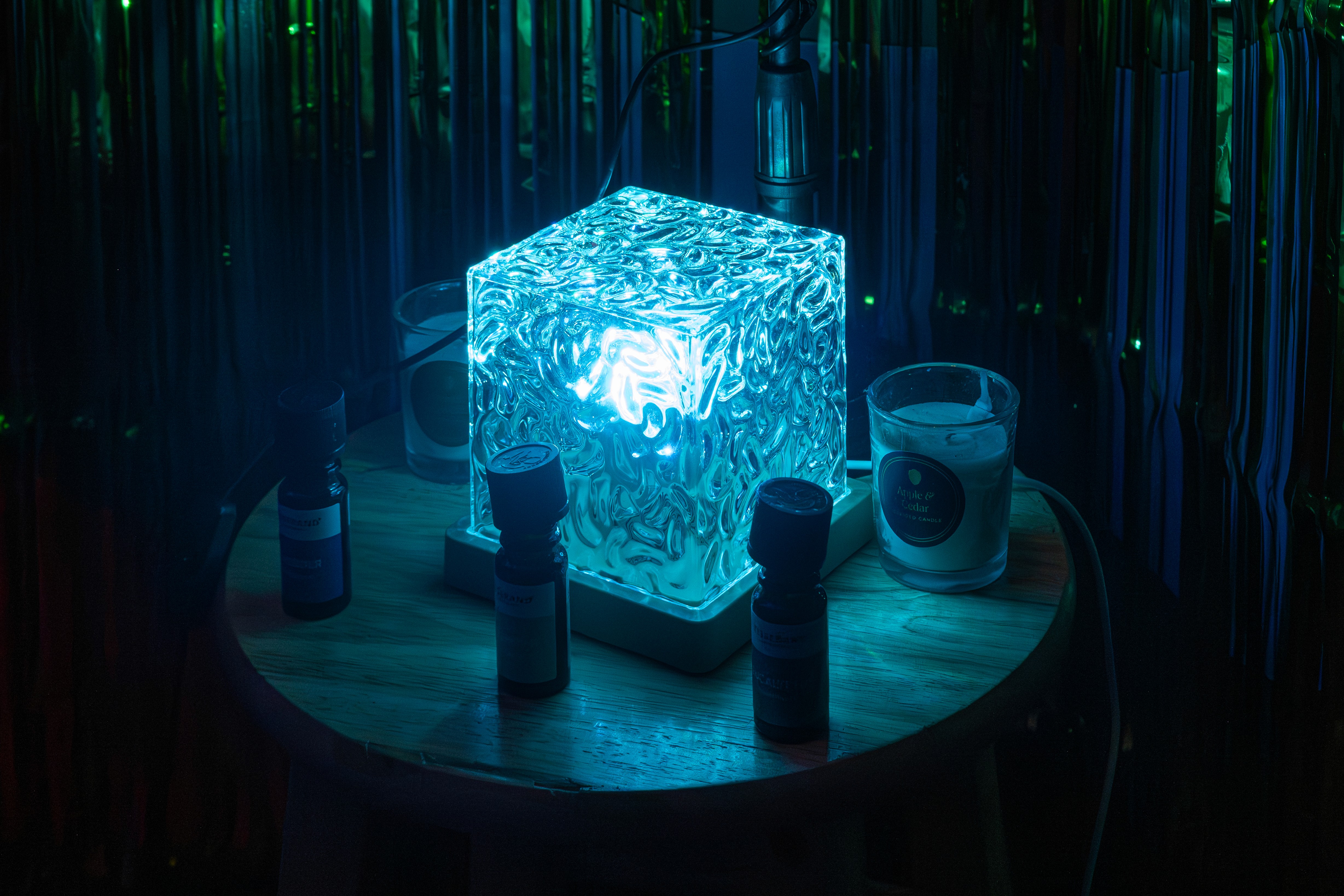
Layer 4 reveals the hiding space: a visually immersive environment filled with vivid sensory stimuli through light and texture. This space evokes the seductive pleasure of the Hideaway in The Nether and invites audiences to reflect on their desire to remain in such environments. They are asked, "What are you hiding from? " and are encouraged to carry this reflection back with them, writing it onto their original “building block” as they exit the tunnel.
Victor Turner’s theory of liminality informs the structure of the installation. As audiences move through each layer, they pass through a liminal transition between ordinary social identity and introspective reflection. At the same time, the installation functions as a liminoid experience, occurring within a voluntary artistic environment that invites contemplation rather than ritual transformation. The work also engages Michael Chekhov’s concept of crossing the threshold, physically manifesting the act of entering layered psychological and emotional states. Rather than encountering the play’s themes for the first time in the theatre, audiences begin reflecting on their relationships to routine, technology, and escapism beforehand.
Additionally, the installation draws on Helen Freshwater’s concept of audiences as co-creators of meaning. Through their participation and movement within the space, audiences actively construct their own interpretations of the installation’s central questions.
Through this layered experiential design, the engagement space transforms audience members into active participants who arrive at the performance already questioning their relationship to reality, escape, and desire.
The Layers of Our Own Hideaways is a research installation that connects themes of coping, addiction, and descent into harmful situations in The Nether to the personal experiences of audience members navigating escapist or immersive spaces. Through a visual and audio journey within each layer of the tunnel, audiences are invited to cross a threshold into their own narratives, reflecting on their lived realities, the routines that shape them, and the ways people seek refuge when reality becomes emotionally overwhelming. In doing so, the installation prepares audiences to engage with the play’s moral and psychological questions by guiding them through an experiential transition between everyday life and escapism.
The installation is structured in four layers, each gradually moving audiences from the familiarity of reality toward a seductive and elusive hiding space. In Layer 1, audiences encounter a brick wall where they write a factor that shapes their everyday reality, prompting the question: What are the building blocks that create my reality?
Layer 2 reflects the repetitive structures of modern life, asking audiences to consider how routines, social expectations, cultural norms, and daily habits influence identity and autonomy. This layer poses the questions: When are you influenced by others? When do you influence others, and why?
Layer 3 introduces the search for escape. Audiences encounter coded sequences and must locate a hidden number, representing the mental searching process that can occur when individuals feel trapped within their circumstances. This moment highlights the tension between confronting problems and diverting attention away from them—a theme central to The Nether.
Layer 4 reveals the hiding space: a visually immersive environment filled with vivid sensory stimuli through light and texture. This space evokes the seductive pleasure of the Hideaway in The Nether and invites audiences to reflect on their desire to remain in such environments. They are asked, "What are you hiding from? " and are encouraged to carry this reflection back with them, writing it onto their original “building block” as they exit the tunnel.
Victor Turner’s theory of liminality informs the structure of the installation. As audiences move through each layer, they pass through a liminal transition between ordinary social identity and introspective reflection. At the same time, the installation functions as a liminoid experience, occurring within a voluntary artistic environment that invites contemplation rather than ritual transformation. The work also engages Michael Chekhov’s concept of crossing the threshold, physically manifesting the act of entering layered psychological and emotional states. Rather than encountering the play’s themes for the first time in the theatre, audiences begin reflecting on their relationships to routine, technology, and escapism beforehand.
Additionally, the installation draws on Helen Freshwater’s concept of audiences as co-creators of meaning. Through their participation and movement within the space, audiences actively construct their own interpretations of the installation’s central questions.
Through this layered experiential design, the engagement space transforms audience members into active participants who arrive at the performance already questioning their relationship to reality, escape, and desire.
Olivia Rossel, Dramaturg
Olivia Rossel, Dramaturg
Installation GALLERY
We acknowledge that this theatre and the university that holds it stand on the traditional territories of the Attawandaron (also known as the Neutral), Anishinaabeg, and Haudenosaunee peoples. Our main campus is in Block 2 of the Haldimand Tract, land promised in 1784 by the British Crown to the Haudenosaunee of the Grand River in recognition of their alliance during the American Revolution.
This territory, which includes six miles on either side of the Grand River, is governed by the Dish with One Spoon Wampum, an agreement that teaches that the land is a shared dish from which we all eat, and that we carry collective responsibilities: to take only what we need, to ensure there is enough for others, and to keep the dish clean for those who come after us. It is an agreement rooted in care, reciprocity, and stewardship.
Gathering here in this theatre, on this land, within this agreement, means recognizing that welcome comes with responsibility. It asks us to consider how we move through shared spaces, how we care for one another, and how the systems we build shape access, safety, and belonging as equal partners.
We acknowledge that this theatre and the university that holds it stand on the traditional territories of the Attawandaron (also known as the Neutral), Anishinaabeg, and Haudenosaunee peoples. Our main campus is in Block 2 of the Haldimand Tract, land promised in 1784 by the British Crown to the Haudenosaunee of the Grand River in recognition of their alliance during the American Revolution.
This territory, which includes six miles on either side of the Grand River, is governed by the Dish with One Spoon Wampum, an agreement that teaches that the land is a shared dish from which we all eat, and that we carry collective responsibilities: to take only what we need, to ensure there is enough for others, and to keep the dish clean for those who come after us. It is an agreement rooted in care, reciprocity, and stewardship.
Gathering here in this theatre, on this land, within this agreement, means recognizing that welcome comes with responsibility. It asks us to consider how we move through shared spaces, how we care for one another, and how the systems we build shape access, safety, and belonging as equal partners.