Narrowing the stereo-scope
of the nether
Narrowing the stereo-scope
of the nether
“Concentration means being with something.”
— Michael Chekhov
“Concentration means being with something.”
— Michael Chekhov
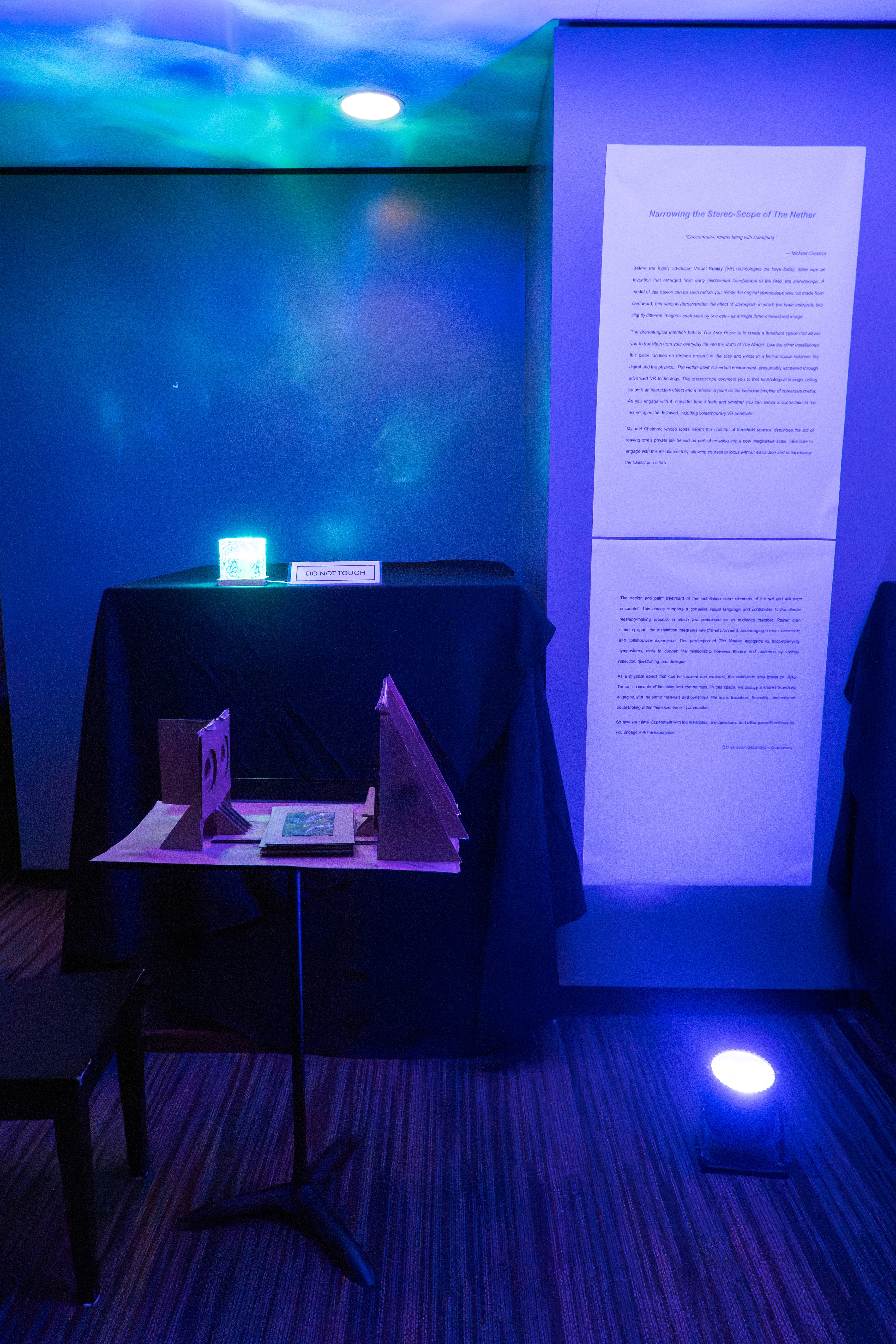
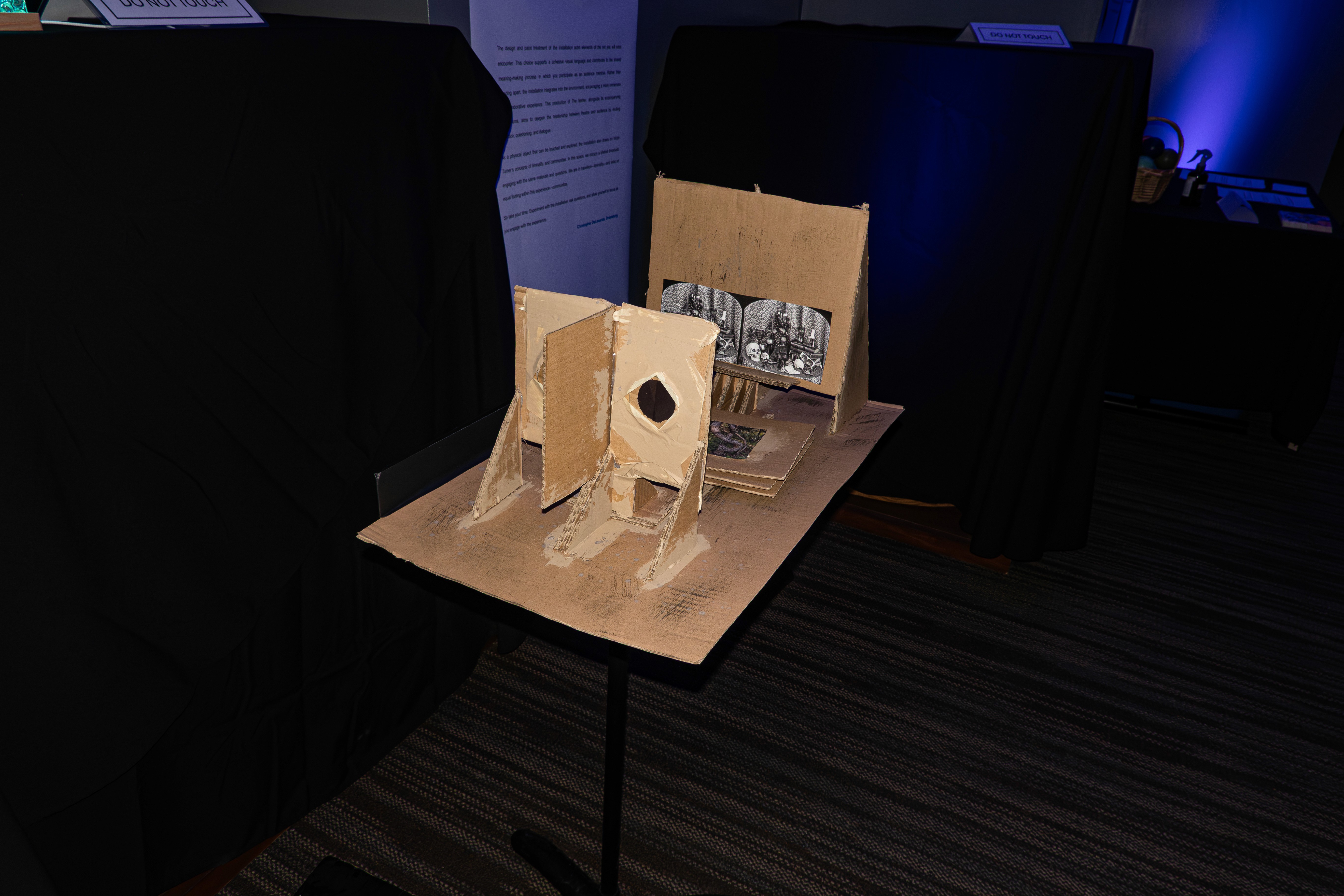
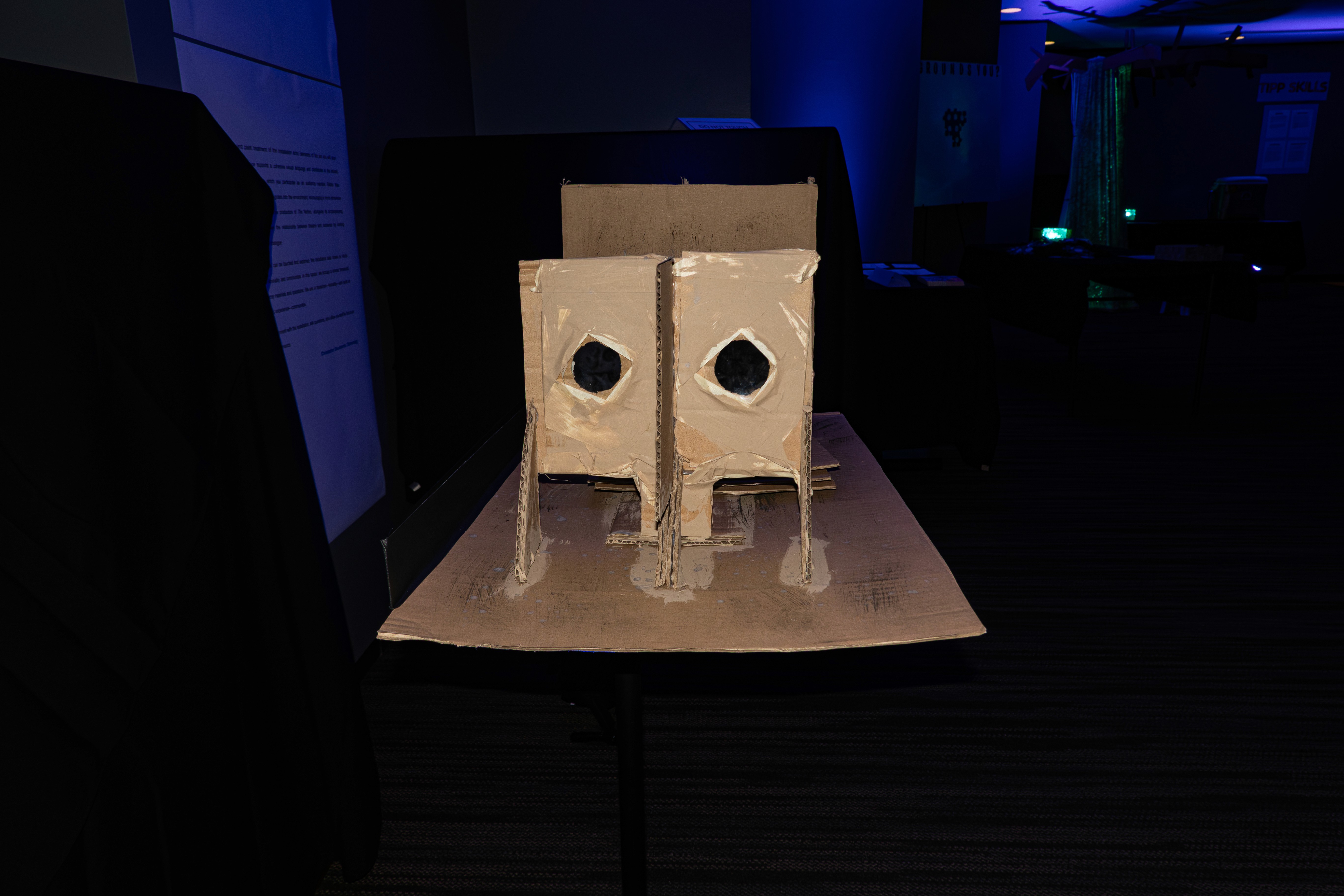
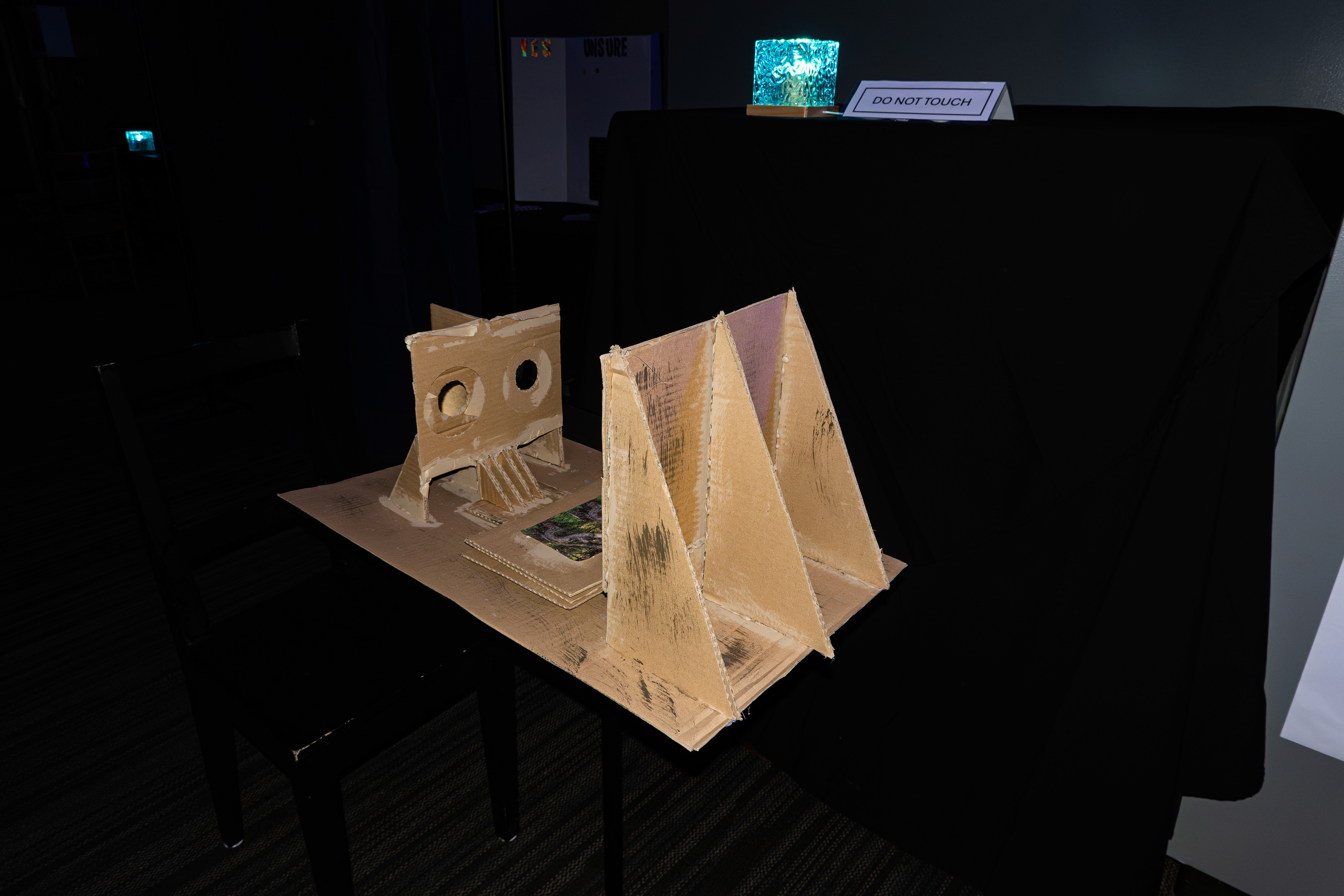
Before the highly advanced Virtual Reality (VR) technologies we have today, there was an invention that emerged from early discoveries foundational to the field: the stereoscope. A model of this device can be seen before you. While the original stereoscope was not made from cardboard, this version demonstrates the effect of stereopsis, in which the brain interprets two slightly different images—each seen by one eye—as a single three-dimensional image.
The dramaturgical intention behind The Ante Room is to create a threshold space that allows you to transition from your everyday life into the world of The Nether. Like the other installations, this piece focuses on themes present in the play and exists in a liminal space between the digital and the physical. The Nether itself is a virtual environment, presumably accessed through advanced VR technology. This stereoscope connects you to that technological lineage, acting as both an interactive object and a reference point on the historical timeline of immersive media. As you engage with it, consider how it feels and whether you can sense a connection to the technologies that followed, including contemporary VR headsets.
Michael Chekhov, whose ideas inform the concept of threshold spaces, describes the act of leaving one’s private life behind as part of crossing into a new imaginative state. Take time to engage with this installation fully, allowing yourself to focus without distraction and to experience the transition it offers.
The design and paint treatment of the installation echo elements of the set you will soon encounter. This choice supports a cohesive visual language and contributes to the shared meaning-making process in which you participate as an audience member. Rather than standing apart, the installation integrates into the environment, encouraging a more immersive and collaborative experience. This production of The Nether, alongside its accompanying symposiums, aims to deepen the relationship between theatre and audience by inviting reflection, questioning, and dialogue.
As a physical object that can be touched and explored, the installation also draws on Victor Turner’s concepts of liminality and communitas. In this space, we occupy a shared threshold, engaging with the same materials and questions. We are in transition—liminality—and exist on equal footing within this experience—communitas.
So take your time. Experiment with the installation, ask questions, and allow yourself to focus as you engage with the experience.
Before the highly advanced Virtual Reality (VR) technologies we have today, there was an invention that emerged from early discoveries foundational to the field: the stereoscope. A model of this device can be seen before you. While the original stereoscope was not made from cardboard, this version demonstrates the effect of stereopsis, in which the brain interprets two slightly different images—each seen by one eye—as a single three-dimensional image.
The dramaturgical intention behind The Ante Room is to create a threshold space that allows you to transition from your everyday life into the world of The Nether. Like the other installations, this piece focuses on themes present in the play and exists in a liminal space between the digital and the physical. The Nether itself is a virtual environment, presumably accessed through advanced VR technology. This stereoscope connects you to that technological lineage, acting as both an interactive object and a reference point on the historical timeline of immersive media. As you engage with it, consider how it feels and whether you can sense a connection to the technologies that followed, including contemporary VR headsets.
Michael Chekhov, whose ideas inform the concept of threshold spaces, describes the act of leaving one’s private life behind as part of crossing into a new imaginative state. Take time to engage with this installation fully, allowing yourself to focus without distraction and to experience the transition it offers.
The design and paint treatment of the installation echo elements of the set you will soon encounter. This choice supports a cohesive visual language and contributes to the shared meaning-making process in which you participate as an audience member. Rather than standing apart, the installation integrates into the environment, encouraging a more immersive and collaborative experience. This production of The Nether, alongside its accompanying symposiums, aims to deepen the relationship between theatre and audience by inviting reflection, questioning, and dialogue.
As a physical object that can be touched and explored, the installation also draws on Victor Turner’s concepts of liminality and communitas. In this space, we occupy a shared threshold, engaging with the same materials and questions. We are in transition—liminality—and exist on equal footing within this experience—communitas.
So take your time. Experiment with the installation, ask questions, and allow yourself to focus as you engage with the experience.
Christopher DeLenardo, Dramaturg
Christopher DeLenardo, Dramaturg
Installation GALLERY
We acknowledge that this theatre and the university that holds it stand on the traditional territories of the Attawandaron (also known as the Neutral), Anishinaabeg, and Haudenosaunee peoples. Our main campus is in Block 2 of the Haldimand Tract, land promised in 1784 by the British Crown to the Haudenosaunee of the Grand River in recognition of their alliance during the American Revolution.
This territory, which includes six miles on either side of the Grand River, is governed by the Dish with One Spoon Wampum, an agreement that teaches that the land is a shared dish from which we all eat, and that we carry collective responsibilities: to take only what we need, to ensure there is enough for others, and to keep the dish clean for those who come after us. It is an agreement rooted in care, reciprocity, and stewardship.
Gathering here in this theatre, on this land, within this agreement, means recognizing that welcome comes with responsibility. It asks us to consider how we move through shared spaces, how we care for one another, and how the systems we build shape access, safety, and belonging as equal partners.
We acknowledge that this theatre and the university that holds it stand on the traditional territories of the Attawandaron (also known as the Neutral), Anishinaabeg, and Haudenosaunee peoples. Our main campus is in Block 2 of the Haldimand Tract, land promised in 1784 by the British Crown to the Haudenosaunee of the Grand River in recognition of their alliance during the American Revolution.
This territory, which includes six miles on either side of the Grand River, is governed by the Dish with One Spoon Wampum, an agreement that teaches that the land is a shared dish from which we all eat, and that we carry collective responsibilities: to take only what we need, to ensure there is enough for others, and to keep the dish clean for those who come after us. It is an agreement rooted in care, reciprocity, and stewardship.
Gathering here in this theatre, on this land, within this agreement, means recognizing that welcome comes with responsibility. It asks us to consider how we move through shared spaces, how we care for one another, and how the systems we build shape access, safety, and belonging as equal partners.